
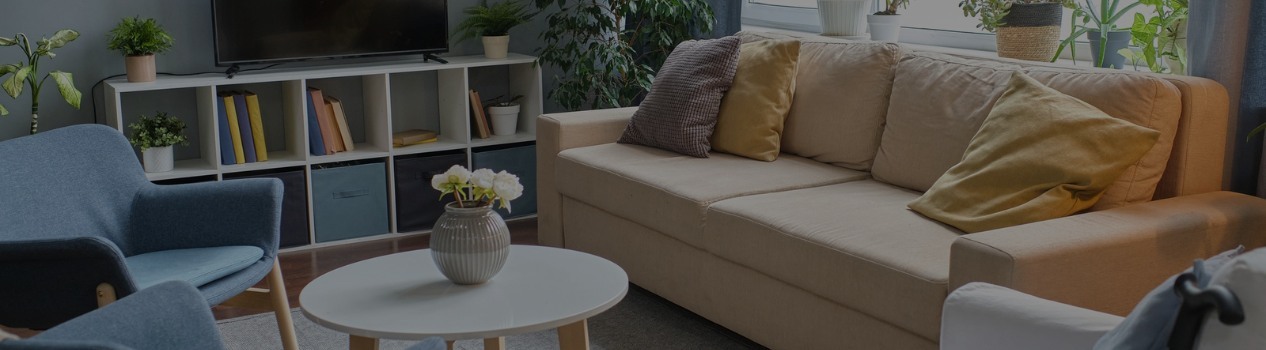
 Homat, Furniture rental is an affordable and flexible furnishing solution for your home.
Relocating abroad does not carry the same meaning depending on whether you leave alone, as a couple or with children. Motivations, daily organisation and emotional experience vary significantly depending on the family situation. While expatriation is still largely perceived as a positive experience, recent studies show that its balance depends heavily on how well the project is planned and supported.
Moving alone: greater freedom, but a need to rebuild anchors
Solo expatriation is often driven by a professional opportunity or the desire to internationalise one’s career. According to surveys conducted by Expat Communication, many expatriates primarily cite the search for a human and cultural experience, as well as personal and professional development, as key motivations (3).
From a practical standpoint, moving alone simplifies certain decisions. Housing can be smaller, the budget easier to manage and administrative procedures quicker. However, all organisation rests on one person. This complete autonomy increases the need to establish new reference points.
Emotionally, the experience can be marked by a stronger sense of isolation. Missing family is reported by 45% of expatriates, and more than a quarter mention feelings of loneliness (3).
Moving as a couple: a shared project, sometimes unbalanced
When expatriation involves a couple, it becomes a shared project, but not always experienced equally by both partners. One partner often relocates for a specific professional reason, while the other supports the move with different expectations.
Data from Expat Communication studies shows that the partner plays a central role in the success of expatriation. More than half of accompanying partners struggle to find their place in the host country (2).
At the same time, 41% maintain a professional activity (1), most often locally. For those who do not work, the reasons are mainly related to childcare responsibilities or a personal and financial balance choice.
Moving with a family: a full life project
Relocating as a family fundamentally transforms the nature of the project. It is no longer just about changing jobs or countries, but about making a collective life choice. Motivations then take on a deeper meaning, such as offering children cultural openness, living a strong family experience, or seeking a more balanced lifestyle.
Figures confirm this dimension. Nearly one expatriate out of two primarily refers to a human and family adventure (3), and 91% recommend expatriation (1) despite the challenges encountered. Reported benefits include personal development, cultural discovery and a positive family experience.
From a practical perspective, the complexity increases. Housing must be suitable from arrival, schooling must be anticipated and the budget adjusted. Each additional variable (children’s age, assignment duration, local context) increases the organisational load.
Studies also highlight a significant increase in mental load. It rises by +20% among expatriates overall, and up to +25% (3) among expatriate employees, due to the overlap of professional and family constraints.
Simplifying the move to secure both departure and return
Having a move-in-ready home helps limit urgent decisions, reduce mental load and secure the arrival, regardless of the family configuration. Returning from expatriation is another sensitive phase. It is considered difficult by 70% of expatriates, for both professional and family-related reasons.
The “move-in packages” offered by Homat are tailored to each situation and household size (from 1 to 6 people). These turnkey solutions allow the home to be adapted to real needs without multiplying trade-offs or delaying the move-in process.
Each expatriation is unique, but all rely on the same balance between organisation, living environment and personal experience. With more than 30 years of expertise in furniture rental and international mobility support, Homat assists expatriates whether they move alone, as a couple or with a family.
Practical organisation: when the setup changes everything
The difference between a successful expatriation and a difficult experience often comes down to the first few weeks. Housing organisation plays a central role.
For a single person, the home is primarily functional. For a couple, it must accommodate both private life and, in some cases, remote work. For a family, it becomes a foundation of stability, capable of supporting school routines, rest periods and everyday life.
Administrative procedures follow the same pattern. They remain relatively straightforward when moving alone but multiply as the household grows. This accumulation directly contributes to mental load, often underestimated before departure.
Sources
Expat Communication Barometers 2022–2023, based on several thousand expatriate responses
The year 2021 seen by expatriates. Expat Communication studies, January 2022
Expatriation, a family and personal adventure. Le Progrès, January 2024