
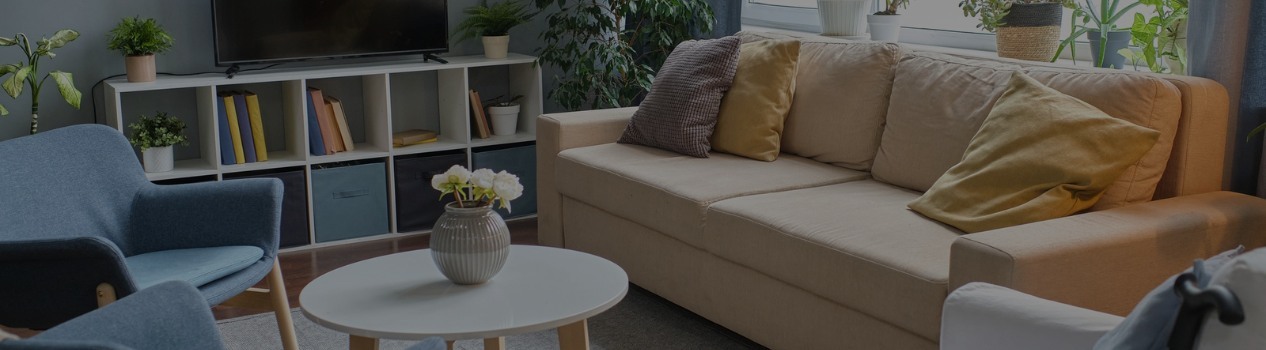
 Homat, Furniture rental is an affordable and flexible furnishing solution for your home.
Before the first viewing even takes place, furniture improves the photos and helps visitors picture themselves in the property. This furniture can be purchased, but renting is often more advantageous. It all depends on the nature of the real estate project: sale, rental, show apartment, and so on. The right choice is the one that meets the need without creating unnecessary constraints.
Purchase or rental: start with the actual use of the furniture
Buying is relevant if the furniture will remain in the property for several years. This is often the case for a long-term furnished rental, a home intended to remain equipped, or a property that will be used over the long term.
By contrast, rental is better suited to a short-term need: sale, photo shoot, home staging, show apartment or commercial relaunch.
Ask yourself this question: will the furniture still be useful once the property has been sold, rented or marketed? If the answer is no, rental will probably be the most suitable option.
Compare the overall cost, not just the price of the furniture
Buying may seem like an attractive investment if you only look at the displayed price. But the real cost also includes delivery, assembly, the time spent choosing items, possible returns or even replacing a piece of furniture that turns out to be the wrong size.
After the sale or marketing phase, you also need to plan for storage conditions and transport to another property, or resale if necessary. For a short-term need, rental avoids tying up budget in furniture that may no longer be used.
Measure the logistical constraint
Furnishing a property takes time. Deliveries need to be coordinated, orders received, items assembled and unexpected issues managed. For an owner or a developer, this logistics can be demanding, especially when the schedule is tight. The question is therefore not only financial. You also need to know who will handle the setup and removal at the end.
At Homat, our teams take care of delivery, furniture installation, connection of equipment if necessary, then collection of the furniture at the end of the planned period. You save time, and the property is ready to be presented without having to manage the entire operational side.
Adapt the solution to the expected level of enhancement
Not all projects require the same level of equipment. For a real estate listing, a few well-chosen pieces of furniture may be enough: armchairs, a double bed, a coffee table, a desk or outdoor furniture. For a show apartment or premium property, the layout needs to be more complete. For a furnished rental, daily use and ease of maintenance must be considered. Before choosing between purchase and rental, you therefore need to define the objective. Is the goal to improve photos, present a new-build development or equip a home for several years?
Using rented furniture in addition to purchased furniture
In some cases, the best solution is to combine both. An owner can buy the equipment intended to stay in the property, such as major appliances or some storage units, and rent the furniture used only to enhance the space.
A developer can rent furniture for a show apartment while keeping certain reusable items for other projects. This mix limits permanent purchases to what is strictly necessary without compromising on presentation. It is particularly useful when the project may evolve quickly: sale, rental, change of unit or extended marketing period.