
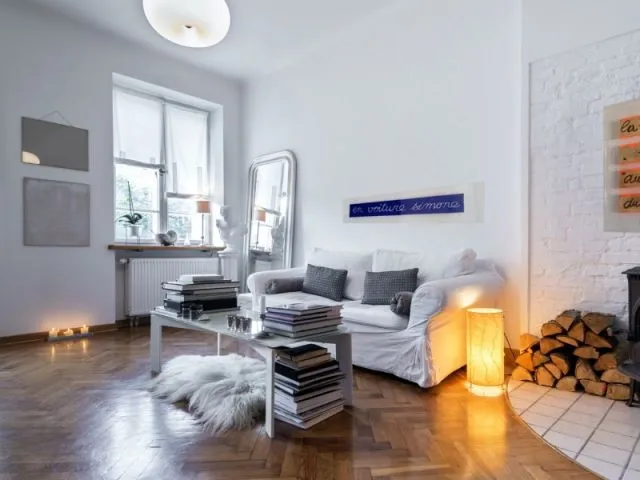
 Homat, Furniture rental is an affordable and flexible furnishing solution for your home.
Offering a furnished property rather than an unfurnished one completely changes the rental equation. While there is certainly a rent premium, the advantages of furnished rentals primarily lie in tax optimization and contractual flexibility—provided you are willing to manage the property more actively and make an initial investment.
The rent premium: a market-dependent variable
A furnished studio in Paris rents for 15% to 20% more than its unfurnished equivalent. In Lyon or Bordeaux, the gap drops to 12%–18%. In mid-sized cities, it barely exceeds 10%.
This premium does not just reflect the cost of the furniture; it primarily monetizes flexibility: a one-year lease versus three years, and a one-month notice period instead of three. This difference in contractual framework explains why the choice between furnished or unfurnished rentals must be evaluated from the very beginning, depending on the target tenant profile and the owner's wealth management strategy. For a master's student or a corporate executive on an assignment, this flexibility has real value.
Larger properties rarely capture this premium. A family-sized two-bedroom apartment (T3) will struggle to find a taker at a 20% markup: families usually own their own furniture and look for long-term stability. The benefits of furnished rentals work best for studios and one-bedroom apartments (T2), which account for 85% of the market.
Tax advantages of furnished rentals
Beyond the visible rent premium, tax benefits are often what tip the scales. The BIC (Commercial and Industrial Profits) tax regime offers significant advantages compared to standard property income (revenus fonciers).
The "Micro-BIC" regime
Furnished rental income falls under the BIC category, not property income. Under the micro-BIC scheme (for annual revenues up to €77,700), the standard tax deduction reaches 50%, compared to just 30% under the micro-foncier scheme for unfurnished rentals. This is one of the most significant financial advantages of furnished renting.
On €18,000 of rental income, only €9,000 becomes taxable when furnished, compared to €12,600 when unfurnished. For a landlord in a 30% tax bracket, this represents €1,080 in tax savings every year.
Depreciation under the actual expenses regime
Beyond €77,700, or by choice, the actual expenses regime allows you to depreciate both the property and the furniture. A studio purchased for €150,000 with €10,000 worth of furniture generates approximately €6,500 in annual deductible expenses. This depreciation can fully offset income tax on these revenues for 10 to 15 years.
However, switching to Professional Furnished Landlord status (LMP, triggered beyond €23,000 in annual revenue under specific conditions) changes the game, introducing social security contributions and professional capital gains tax. Crossing this threshold requires careful accounting supervision.
The management constraints of furnished properties
These financial and tax benefits come with operational downsides. While lease flexibility is one of the key perks of renting furnished, it also leads to higher tenant turnover.
The cost of tenant turnover
Lease flexibility comes at a price. A tenant in a furnished property stays for an average of 18 months, compared to 3.5 years in an unfurnished one. Each departure costs between €1,000 and €1,500 in inventory checks, repairs, and rental vacancy.
Over a ten-year period, a furnished property with six tenant turnovers accumulates €7,000 in expenses, compared to €2,500 for an unfurnished property with only two turnovers. This difference eats into a portion of the rent premium.
Day-to-day maintenance and repairs
A furnished property requires 8 to 12 maintenance interventions per year, compared to 2 to 4 for an unfurnished one. Appliance breakdowns, broken dishes, worn-out sofas: furniture requires constant upkeep. This is a crucial factor to consider when weighing the pros and cons of a furnished rental.
Long-distance landlords often delegate this to a property management company or concierge service, which typically charges 10% to 15% of the rent. For a studio renting at €900/month, this amounts to €90 to €135 monthly, reducing the 20% rent premium to a net 5%–7%.
A substantial initial investment in furniture
Converting an unfurnished property into a furnished one requires an upfront budget that must be planned for. Before furnishing an apartment for rent, the landlord must assess the expected level of equipment, the durability of the furniture, and the time required for installation. The advantages and constraints of renting furnished are felt right from this stage, as expenses vary heavily based on the surface area and the target level of comfort.
A realistic budget
Furnishing a studio costs between €3,500 and €5,000. A one-bedroom apartment (T2) jumps to €6,000–€8,000. While French law mandates eleven specific categories of equipment, the market demands more if you want your furnished rental to have a competitive edge. Beyond the mandatory equipment for furnished housing, certain comfort features can make all the difference in highly competitive areas.
Tenants compare listings closely. A property without a washing machine, internet connection, or TV loses 30% of its inquiries in competitive markets. These differentiating amenities add €1,200 to €1,800 to the initial budget.
Furniture rental: amore flexible alternative
Furnishing a studio costs between €3,500 and €5,000, while a one-bedroom apartment rises to €6,000–€8,000. This initial outlay can be a heavy burden, especially when combined with property acquisition costs and potential renovation work.
Furniture rental offers an alternative that converts this upfront investment into manageable monthly payments.
Specialized companies like Homat offer a comprehensive service: delivery, furniture setup, as well as connecting and testing appliances. All equipment remains under warranty throughout the rental period. In the event of a breakdown, the provider quickly replaces the defective item, meaning the landlord doesn't have to handle tenant relations or advance repair costs. This outsourcing represents a significant time saver for landlords who cannot intervene quickly, further tipping the scales in favor of furnished rentals.
This formula also limits risk: if the property fails to attract tenants as a furnished rental, the furniture lease agreement can be terminated much more easily than trying to resell purchased furniture.